
↓
 
Loop Minnesota

Loop Minnesota

Advocating for Communication Access for those with Hearing Loss – all Hearing Assistive Listening Systems: Hearing Loops, FM or IR Assistive Systems, Wi-Fi or Captioning - and Bluetooth when it is Available

  • Home
  • Blog
  • List of Loops
    • List of Assistive Listening Systems by Facility Name
    • List of Assistive Listening Systems by City
  • Hearing Loop Basics
  • Loop Design and Installation
  • Types of Assistive Technology
    • Bluetooth
    • Obstacles to Hearing Loops
    • FM (Frequency Modulation)
    • Infrared (IR) Access Systems
    • CART (Communication Access Realtime Translation)
    • Captions
  • Gallery
  • About Us
  • Contact Us
<< 1 2

Category Archives: Telecoil

Post navigation

Newer posts →

Telecoils? Ask for them!

Loop Minnesota Posted on February 18, 2021 by Monique HammondJuly 22, 2023

Telecoils? Ask for them!

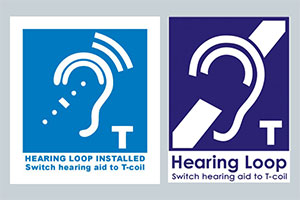
The “T” in the above pictures stands for Telecoil. It tells people to activate their telecoils because the venue has a hearing loop. Do your hearing aids have telecoils? Most people do not know and have no clue what telecoils actually are and why they may be important.

Telecoils are wireless antennas that are already manufacturer-installed in most hearing aids and in cochlear implants. They help people access hearing loops that are installed in many venues across the United States. Click to check on your State. By the way, loop locator lists may not be complete due to inconsistent reporting on installations.

If there is no loop, one might ask why not?

If you have telecoils, call the venue that you will visit ahead of time to inquire about loop access.

That said, hearing loops can be accessed by anyone who has a telecoil-equipped device, such as a loop listener or even telecoil-enabled headsets or earbuds. Hearing loss, hearing aids or cochlear implants are not required to hear clearly through a loop.

A matter of communication access.

Unfortunately, the telecoil issue is often not discussed with patients during hearing aid consults and fittings. Many specialists deem hearing loops to be “old” technology that confuses clients and that does not merit a lot of time.

Of course, this limits people’s communication access choices and options when in reality installers report that they notice an increase in demand for hearing loops. Does your State have a requirement for State-funded building projects ─ for new buildings and for remodels ─ to implement good acoustic design and hearing loops in public gathering spaces? Minnesota does. Why would one accept to stay locked out communication-wise when States actually try to help?

And so, now that you know, ask about telecoils.

The specialist has to “activate” them for them to work. Also, get instructions on how and when to use them. Hint: Look for the blue signs with the T!

Learn about Hearing Loops and advocate for them.

The cooperation between telecoils and correctly installed and conformity-certified hearing loops are so far the only way for getting crisper and clearer sound in larger and often noisy venues such as places of worship, conference rooms, convention centers etc. Hearing loops are non-proprietary and work with the telecoils in any hearing aid brand.

With COVID still about, right now would be a good time to plan ahead for the time when society opens up again. Who knows? Maybe now is also the time to get an advantageous installation deal?

One thing is for sure: There is no time like the present to start growing the “Loop Lists”. We want to see lots and lots of blue “Loop” signs.

Note: Loop Minnesota does not favor one manufacturer/distributor or product over another. Website links are for information and illustration only.

*****

For questions, contact us.

Also, visit my website at hearing-loss-talk.com where I blog about all sorts of issues related to hearing and hearing loss.

Posted in advocacy, Advocacy for Hearing Loops and Telecoils, Advocacy for Telecoils, Ask for Telecoils, cochlear implants, communication access, hearing aids, hearing loops, Loop Minnesota, Telecoil

Hearing Loop Solutions for Daily Living

Loop Minnesota Posted on January 14, 2021 by Monique HammondJuly 22, 2023

Hearing Loop Solutions for Daily Living

Small but practical

Traditionally, people think of the installation of pricey hearing loops in large, noisy venues where communication  for those with hearing loss is close to impossible. Here, one might mention meeting/conference rooms in workplaces or in libraries; auditoriums; places of worship; convention halls etc.

But these are not the places where we spend significant amounts of time in daily life. Yet, understanding speech in background noise is an ongoing challenge, especially in smaller groups and during one-on-one conversations, at home or at work.

Earlier, I had mentioned the usefulness of a neckloop and of desk loops for businesses. These desk loops are basically dual intercom systems that can be tied to a hearing loop.

However, I came across some interesting and practical loop ideas while searching for everyday and more affordable applications of loop technology. Remember that telecoils are necessary for tapping into a hearing loop.

Check it out

As always, the links for different products are for information and illustration only, as Loop Minnesota does not favor one manufacturer or distributor over another.

Make sure that you read all the instructions and specifications regarding the equipment. Are any other accessories required, such as amplifiers, batteries or microphones. Discuss your needs, prices and installation details with a specialist. Might it be a good idea to get professional help so that the system is installed correctly?

  • How about a loop built into a clipboard? This is a portable device and could be handy in many work situations. https://yourhearing.net/clipboardhearingloop.htm
  • “Loop mats” can be used at home or for easing communication for businesses. Find more info on them at Williams AV

The mat can be placed on or below a non-metal chair so that one sits in the loop. Or, it can be on the floor in front of a customer service window, for example for people to step into the loop.

Yet, might the mat be a tripping hazard? How about people in wheelchairs or with walkers? These are installation details to be discussed with the representative.

  • Intercom loops for homes, apartment buildings or businesses.

Going to visit friends in an apartment building with a fuzzy intercom? What was that? Wha-whup. I-boo-penny. Instead, it would be nice to hear: Come on up. I’m in two-twenty.

There is help for this:

www.ampetronic.com/wp-content/uploads/2018/03/UP39701-4-HLS-2C-datasheet-interactive-V005.pdf

These are just some examples. There are many more manufacturers and vendors of hearing loop systems. So, where would you like to hear and understand better? I bet there is a loop for that.

****

For any questions or suggestions regarding hearing loops, contact us.

Also visit my website: hearing-loss-talk.com where I blog about all sorts of topics related to hearing and hearing loss.
Posted in assisitive listening, business access, communication, communication access, counter hearing loops, Hearing Loop Solutions for Daily Living, hearing loops, intercom loops, Loop Minnesota, neckloop, Telecoil | Tagged intercom loop | 3 Replies

COVID Homebound? Learn About Neckloops

Loop Minnesota Posted on November 10, 2020 by Monique HammondMarch 15, 2022

Learn About Neckloops

Got telecoils in the hearing aids but no loop at home with which to use them? Learn about the induction neckloop, which could be a very helpful tool for those who do not have Bluetooth hearing aid connectivity for streaming over short distances.

What is a neckloop?

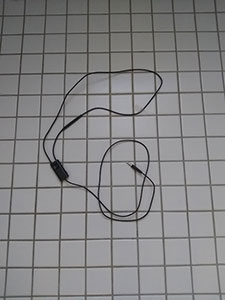
A basic, non-amplified neckloop is a miniature version of a large loop, such as a room loop. It is an electrical wire that is worn unobtrusively around the neck, under a shirt maybe. It has a plug that connects to different sound sources, such as personal FM amplifiers, phones, MP3 players, laptops, TV etc.

The sound source energizes the loop wire. Users activate the telecoils by switching the hearing aids or cochlear implants into T-mode or T/M mode. The telecoils tap into the magnetic field generated around the wire and pick up the refined audio signal for much clearer listening.

Of course, there are all sorts of assistive devices on the market. However, at a cost of less than $50, I find that my neckloop (pictured above) was a good investment. When I do Zoom presentations, the loop is plugged into the laptop headphone jack. It is invisible to the audience and so is the wireless communication between the neckloop and the hearing aid Telecoil. Discussions that all too often take place in low-quality sound environments become a lot easier to follow.

Complexity and compatibility

More advanced neckloop versions incorporate a microphone and amplifier button or wheel. These are often referred to amplified or powered neckloops. They cost more than the basic version and the larger mic/amplifier portion is visible. But they do have their advantages.

People who use such loops regularly for easier communication, especially at work, share that they are great for one-on-one communication, while being socially distanced. An amplified/powered neckloop could be quite helpful at the doctor’s or lawyer’s office or when visiting with a friend. They also facilitate hands-free telephone conversations that will be heard in both ears if the user has two hearing aids with telecoils.

Amplified/power neckloops must be matched to the devices and phones to which they will connect. Compatibility is key and so it is important that the correct connector cables are provided or purchased. Read the fine print!

Making the most of the devices that we have

People with hearing loss know that change is constant, especially when it comes to changes in hearing technology. Yet, it does not always have to terribly expensive and over-the-top complicated. For the price, neckloops can help us make the best of all sorts of hearing gadgets that we have already stashed around the house.

Do some research. Look at the websites of the many companies that deal with this technology, such as these local providers:

harriscomm.com

williamsav.com

Also, talk to the audiologist about neckloop options and assistive listening devices (ALDs).

However, for any loops to work, we must remind audiologists that we need telecoils in our hearing aids and cochlear implants – tuned to our hearing loss and activated.

And so, spend a few moments googling the topic because in the World of Hearing Loss learning never stops. Contact us at loopminnesota.org to learn more.

Disclaimer: Any web addresses or links are provided for information and illustration only. The author and Loop Minnesota do not favor one manufacturer, supplier or company over another

Posted in assisitive listening, audiologist, cochlear implants, communication, COVID-19, hearing aids, Learn About Neckloops, neckloop, Telecoil | Tagged assisitive listening, audiologist, cochlear implant, COVID-19, hearing aids, neckloop, telecoil

Hearing Loops for Businesses

Loop Minnesota Posted on October 8, 2020 by Monique HammondJuly 22, 2023

Hearing Loops for Businesses

Shortcomings in equitable access

Although totally necessary, COVID-19 safety precautions have led to serious communication issues for those with hearing challenges ─ over 20 percent of the population.

While all customers and clients need equitable access to communication at any time, the Coronavirus has uncovered the fact that many businesses have few if any ways of accommodating hearing loss for everyday business transactions.

No more lipreading

Speechreading (lipreading), an important communication method for those with hearing loss has become pretty much impossible these days. Keeping at a distance weakens sound signals, which are further muffled by facemasks and plastic or glass barriers. Facial expressions are no longer visible. And then, there is no other accommodation!

Even as the COVID pandemic rages on and safety precautions are all important, tending to daily business should not be a dreaded chore because of lack of access. And that access should be discreet, wireless and touchless while providing sound clarity.

Counter Hearing Loops can help.

These have been around for some time and are very common overseas. They are simpler, faster and less expensive to install than whole area loops. There are even portable versions.

Clients can tune into the loop sound signal by activating the telecoils in their hearing aids, cochlear implants or portable T-coil devices. No yelling. No overly amplified, embarrassing cacophony. No need for unhygienic access devices.

Get information

When it comes to sound access, every situation is different. Therefore, it is important to do some research and to get information from knowledgeable sources. Get started by Contacting Us.

Advertise!

Once counters or kiosks have been made accessible, include this information in your advertising material. Let people with hearing loss know that you are inclusive and that equitable access is an important business concern.

The blue-and-white hearing loss symbol marked with a prominent “T” (for telecoil or T-coil), tells customers that they have loop access and which waiting line or service desk to choose.

Disclaimer: The above web address links are provided for information and illustration only. Loop Minnesota does not favor one manufacturer, company or supplier over another.

Posted in Advocacy for Hearing Loops, business access, cochlear implants, communication access, counter hearing loops, COVID-19, hearing aids, Hearing Loop Solutions for Daily Living, hearing loops, Hearing Loops for Businesses, Hearing Loops Help Everybody, Loop Minnesota, Telecoil | Leave a reply

COVID-19? Need for Hearing Loops & T-coils

Loop Minnesota Posted on September 26, 2020 by Monique HammondMarch 18, 2022

COVID-19? Need for Hearing Loops & T-coils

Growing communications challenges

As the COVID-19 pandemic rages on, communication challenges of all kinds have turned into an acute issue for those with hearing loss. Speechreading (lipreading) has become impossible during these times of social distancing, masked outings and muffled conversations. Being talked to through plastic or glass partitions contributes to the further dulling of sounds.

As society gradually reopens ever so hesitantly, continued distancing and mask requirements will remain in effect and so will the communication hurdles. Sitting up front, close to the speaker is a thing of the past. “Up close” is a lot further back these days.

Now is the time to advocate for communication access

Wouldn’t it be nice to connect via telecoil or T-coil to hearing loops installed at bank and pharmacy windows, at information desks, in class rooms, libraries, places of worship and in health facilities? Gone would be the background noise and speech would be so much easier to understand – without the struggle, the fatigue and the embarrassment. Hearing loops are especially helpful in large, noisy venues such as convention and meeting rooms.

It is often said that anybody who has ever listened to speech through a correctly installed hearing loop does not want to turn back. As we go forward into a shaky communication future, it is more important than ever for people with hearing loss to get involved and to stand up for communication access. Let’s not be left out – again!

Visit this website and learn about it

The problem is that many people do not know much – or anything at all -about this technology. Non-proprietary hearing loops are different from proprietary, short-distance Bluetooth. A hearing loop is a special electrical wire that is installed throughout or around the area that is to be made accessible.

Telecoils or T-coils are tiny wireless antennas that can be found in cochlear implants, hearing aids and hearing devices large enough to accommodate them. They allow the user to tap into the sound energy carried by the magnetic field that surrounds a hearing loop that is in active service. Together, loops and telecoils act as assistive listening “systems.”

Do your hearing aids have telecoils?

Find out! Now is also the time to ask hearing specialists if the hearing aids that you plan to buy – or have already bought -have telecoils. Most people do not know because they have never told about them. Yet, in order for them to work, the hearing specialist must “activate” the telecoils and tune them to the hearing needs of the client. He/she must also instruct the client on how and where to use them.

The future of access is up to the people

In the end, do people with hearing loss want to be connected and included as communication snags pile up? If yes, it is time to act. Hearing loops do not magically appear. The technology needs advocates and believers who make the case for much-needed accessibility.

And so, what will our communication future look like? As President Abraham Lincoln told us “The best way to predict the future is to create it.” And the time to become “creative” and motivated is now.

Monique Hammond, VP Loop Minnesota

*****

Also, visit my website: hearing-loss-talk.com. I blog about all sorts of topics related to hearing and hearing loss.

Posted in advocacy, Advocacy for Hearing Loops, Advocacy for Hearing Loops and Telecoils, Advocacy for Telecoils, assisitive listening, cochlear implants, communication access, COVID-19, hearing aids, hearing loops, Loop Minnesota, Need for Hearing Loops & T-coils, Telecoil | Tagged assistive listening, communication access, COVID-19, hearing aids, hearing loops, hearing loss, T-coils, telecoils

Post navigation

Newer posts →

Our Partner Organizations

Our Partner Organizations
Minnesota Commission of the Deaf, Deafblind & Hard of Hearing
Minnesota Council on Disability
HHLAA Get in the Hearing Loop
©2026 - Loop Minnesota - Weaver Xtreme Theme Privacy Policy
↑