↓
 
Loop Minnesota

Loop Minnesota

Advocating for Communication Access for those with Hearing Loss – all Hearing Assistive Listening Systems: Hearing Loops, FM or IR Assistive Systems, Wi-Fi or Captioning - and Bluetooth when it is Available

  • Home
  • Blog
  • List of Loops
    • List of Assistive Listening Systems by Facility Name
    • List of Assistive Listening Systems by City
  • Hearing Loop Basics
  • Loop Design and Installation
  • Types of Assistive Technology
    • Bluetooth
    • Obstacles to Hearing Loops
    • FM (Frequency Modulation)
    • Infrared (IR) Access Systems
    • CART (Communication Access Realtime Translation)
    • Captions
  • Gallery
  • About Us
  • Contact Us
1 2 >>

Category Archives: Telecoil

Post navigation

← Older posts

Finding Auracast™ Assistive Listening?

Loop Minnesota Posted on June 5, 2025 by Monique HammondJune 5, 2025

Auracast™ is the latest hot topic in audio & hearing research and technology. Articles are written about it. It is debated and discussed in hearing loss and accessibility meetings. Hearing aids and cochlear implants are sold as Auracast-ready. But what does this all mean? What is Auracast™ and where can we find it to experience it?

New technology in a worldwide market.

Commonly referred to as Auracast™ Broadcast Audio, this is a new and evolving Bluetooth® trademark Assistive Listening System (ALS) for public and personal use. The technology is added to the list of already existing access options, such as FM, IR, hearing loops and WiFi. That said, all currently available technologies remain relevant and Auracast™ will coexist with them into the future.

In this emerging and competitive worldwide market, it takes time for manufacturers, installers and venues to catch up with Auracast™ broadcasting and for audiences to become ready for Auracast™ receiving. Right now, we still need it all. Note that those with telecoils in their hearing aids or CIs will also be able to connect to Auracast™ Broadcasting by plugging a neckloop into the provided Auracast™ receivers.

Broadcasting and receiving

Auracast™ uses L.E. (Low Energy) Bluetooth Audio to broadcast (transmit) sound wirelessly from one Auracast™ transmitter to many Auracast-ready receivers (listening devices). Bluetooth compatibility between Auracast™ transmitters and Auracast™ receivers enables people to share their audio with others. The technology promises improved sound quality. But those who are hard-of-hearing may wonder how well Auracast™ will perform in background noise, their archenemy?

Transmitters can be anything from integrated commercial Auracast™ broadcasting units to Auracast-enabled TVs, laptops, pads, computers and smartphones. Receivers are Auracast-compatible listening devices and instruments, such as earbuds, headsets, hearing aids, cochlear and bone-anchored implants and smartphones.

So, where can one listen to Auracast™?

This is a bit of an issue. In the State of Minnesota, no Auracast-broadcasting venues are currently known to Loop Minnesota nor to the people who contact us because they want to listen to the advertised clearer sound with their Auracast-ready hearing aids or cochlear implants.

As of this writing, one could say that public broadcasting installations lag behind advertising & sales efforts, media attention and people’s expectations. Of course, practical issues like pricing and the availability of reliably trained local installers may also contribute to delays.  

That said, Auracast-listening opportunities might already be out there. But where?  If anybody knows of an Auracast-equipped broadcasting venue in our State, please let Loop Minnesota know. Contact us through this website. We want to establish an Auracast™ location list for our website – as we have done for Hearing Loops.

Getting ready

Eventually, Auracast™ will come to venues near us. Meanwhile, consumers are advised to check on the Auracast™ status of new purchases, such as hearing & listening technologies, home entertainment equipment, smartphones etc.  Although Auracast™ access in public places will happen gradually over time, we want to get ready. But for now – we watch and wait.
Posted in assisitive listening, Auracast, Bluetooth, cochlear implants, hard-of-hearing, hearing aids, neckloop, Telecoil | Tagged assisitive listening, Auracast, Bluetooth | Leave a reply

Correct Microphone Use is Essential for Consistent Hearing Loop Sound

Loop Minnesota Posted on July 11, 2023 by Monique HammondJuly 11, 2023


For hearing loop sound to be clear and consistent, loop-connected microphones (mikes) must be used correctly.

The microphone style, type and installation vary with the venue. But no matter what these choices are, sound signals that do not go through loop mikes are not fed into the hearing loop. They are not picked up by telecoils and cannot be heard by those listening through the loop.

·        A church member wondered what was wrong with the church hearing loop. He heard and understood the sermon and readings perfectly, but he could not hear anything when the pastor made announcements away from the altar and pulpit.

Obviously, the loop worked. However, in some way the pastor was not “miked” when he addressed the congregation away from the fixed loop microphones attached to the altar and pulpit. That’s when a loop-connected handheld mike should have been used. Then again, maybe the pastor had a body/belt worn microphone pack, such as a lapel mike, that was not turned on. Or maybe he forgot to wear it?

·        Recently, my husband and I attended the launch of a new hearing loop in a Town Council Chamber. The microphone used for public comments was a handheld mike that was used incorrectly in many ways. People held it low at chest level, turned their heads away from it and waved the mike around…

Listening through the loop became almost impossible as the burping, halting sound faded in and out. In this case, a fixed mike such as a “gooseneck” mike is preferrable as it forces people to speak directly into it. The problem has since been resolved.

Tips for improved loop microphone use

·        Make sure that loop-connected microphones of any style are turned on and ready for use.
·        Speak at a normal voice level directly into the microphone.
·        Do not walk away from fixed loop mikes – or use a loop-connected portable mike
·        During “looped” question-and-answer sessions, handheld microphones are passed around so that all can hear the question and the             answer. The person who has the mike speaks – one at a time.
·        Hold handheld mikes still and close to the mouth, usually at chin-level. This leaves the lips of the speaker visible.
·        When you turn, the microphone must turn with you in order to maintain that close-to-the-mouth position.
·        Waving a handheld mike around or turning the head away from it leads to uneven, broken-up sound signals that frustrate loop users.
·        Ultimately, maintain the handheld or body-worn mikes: Turn them off and wipe them clean after use. Store them correctly. Put them             on the charger or replace the batteries as needed.

In the end, correct microphone use is essential for consistent hearing loop sound. It promotes clear and effortless listening, which in turn makes for satisfied hearing loop users.  It is a matter of communcation access and quality of life.

*****

If you want to learn more about various topics concerning hearing and hearing loss, please see my blog at  https://hearing-loss-talk.com/

Posted in communication access, hearing loops, Microphone, Telecoil | Tagged hearing loop, hearing loop microphone, hearing loop sound, Loop Minnesota, telecoil | Leave a reply

Hearing Loop Advocacy Talking Points

Loop Minnesota Posted on March 16, 2022 by Monique HammondJuly 22, 2023

Spread the word

Advocates speak in favor of a particular cause with the purpose to inform and to change behavior. In this case, the “cause” is equitable access to communication for the hard-of-hearing in loud, echoey places by means of hearing or induction loops.

Although nobody needs to be a “loop specialist”, it is important to be reasonably familiar with some basic facts of the technology. Also, a polite, non-confrontational approach makes people more willing to listen.

And so, how can people make an impact and convince decision makers that a hearing loop would be indeed a good investment for their places of worship, convention venues or business areas, such as information or customer service windows? Following are some tips that can be considered while making a case for loops.

  1. Personal Experience.


Describe in a few words how connecting hearing aids to loops by means of telecoils improves clarity of speech, fosters inclusion and improves quality of life. Make it your story. By now, just about every family has at least one relative who struggles with hearing loss. An emotional appeal can be quite effective.

2. Sound Demonstration

From your smartphone or laptop, share a YouTube to illustrate the difference between the un-looped and looped sound environments. Although there are others, here are two examples:

New York Subway station: https://www.youtube.com/watch?v=Ahbz0VvlZF0

Church readings: https://www.youtube.com/watch?v=XOKuf_Eu1J4

3. Basic explanation of how a loop & telecoil system works – if asked.

Note: The actual hearing loop is an electrical wire. Telecoils are wireless antennas in hearing instruments.

Sound from a speaker’s microphone activates the hearing loop wire. Telecoils in hearing instruments tap into the magnetic energy of the loop. The magnetic signals transfer wirelessly to the hearing instrument, which changes them back into audible sound. The audible signal is now clearer and stronger without any or minimal background noise.

Detailed explanations can be found at loopminnesota.org. People can also contact us for more information.

5. Know some of the advantages that loops provide

  • Once installed, they are long-lasting and virtually maintenance-free
  • Loops are invisible and discreet, which eliminates the risk of stigma attached to hearing loss
  • Loops are user-friendly and easy to use
  • Loops make businesses accessible to the hard-of-hearing. Advertise your loop!
  • Hearing loops for service windows, check-out counters and information desks are becoming quite popular. 2-way communication systems tied in with a loop are available as kits. All-in-one portable devices are also popular. There are plenty of choices out there. These are some examples for starters.


6. What about disadvantages?  

  • The physical installation is often seen as an invasive drawback. Loops for larger areas – places of worship, libraries, convention halls or meeting rooms – are best installed during new construction or during venue refurbishments.
  • Cost. This depends on the size of the loop and on the complexity of the design. It is best to have a certified loop contractor do an on-site inspection.


7. Gratitude and follow-up

  • Thank people for their time and their willingness to listen.
  • Ask if and when you can check back with them. Usually, other members or committees have to be consulted on the feasibility of the project. However, it is important to keep the channels open and the discussion going.


In the end,

It is up to those who are hard-of-hearing to advocate on their own behalf for equitable communication access by means of hearing loops. For now, loops and telecoil systems are the only and best bet for helping hard-of-hearing people understand speech clearly in large, loud and echoey places. So, spread the word on the communication advantages of hearing loops in the interest of inclusion and quality of life.

****

Note: Any links to websites or mention of products or technology are for information and illustration only. Loop Minnesota does not favor or endorse one brand, manufacturer or distributor over others.

****

Also visit my website hearing-loss-talk.com where I post blogs on all sorts of issues concerning hearing loss.


Posted in Advocacy for Hearing Loops, business access, communication access, hard-of-hearing, Hearing Loops for Businesses, hearing loss, Loop Minnesota, Telecoil | Leave a reply

Hearing Loops and Telecoils or Bluetooth? We Need Both!

Loop Minnesota Posted on January 25, 2022 by Monique HammondJanuary 26, 2022

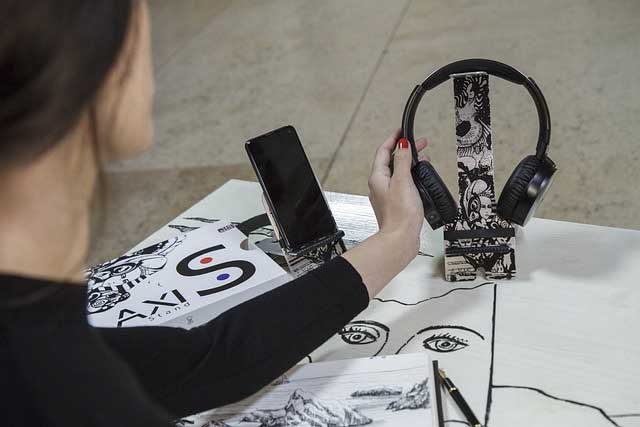
Bluetooth Headset

It is all about access to communication

Recently, the question was asked in a meeting why we keep talking about the need for telecoils in hearing aids and cochlear implants and the installation of hearing loops in venues when Bluetooth is in and telecoils and loops are out.

This is a very timely question as it talks to the confusion about current and future use of Bluetooth for those with hearing loss.

Hearing loops and telecoils work together anywhere in the world. They work in venues of any size, from TV dens in homes to convention halls. No synching needed.

While Bluetooth enables wireless connections between smartphones, hearing aids and other Bluetooth devices, even the latest version of this technology is not ready for public, large-scale signal broadcasting. That type of connectivity is still at least another 10 years out, according to technology specialists.

Loops and telecoils versus Bluetooth? At this time, these are two very helpful but different types of technology that coexist and complement each other.

Telecoils and Bluetooth can be installed together in the same hearing instruments, such as hearing aids and cochlear implants. They have their pros and cons but for the foreseeable future, we need both types of technology.

Because in the end, this is all about quality of life through equitable access to communication for those with hearing loss.

Bluetooth changes by leaps and bounds

In 2014, Bluetooth became a popular feature in hearing aids. People with hearing loss immediately appreciated having a direct, wireless, hands-free connections between their smartphones and their hearing instruments.

Nowadays, cochlear implants, earbuds and devices known as “hearables” are also routinely Bluetooth-enabled. Hearing devices can link up with laptops, TVs and computers and more. Accessories like Bluetooth adapters and streamers help bridge connectivity and compatibility issues.

Overall, Bluetooth is technology that allows wireless, one-on-one, short distance connections between different devices that recognize each other. So far, it is mostly helpful for private, personal use.

Enter Bluetooth LE 5.2

With its new coder-decoder (CODEC) LC3, Bluetooth LE 5.2 is fast becoming the new hype of the town. Within the next year or so, this technology will be found in smartphones, hearing instruments and other devices. While it offers some great advantages, converting to this latest Bluetooth version, or protocol will NOT be a simple software upgrade of existing technology.

And so, people must prepare themselves to invest in new phones and hearing instruments capable of handling this newest Bluetooth edition. In order to get ready for Bluetooth LE (LC3), manufacturers are busy adapting their device hardware and software. Particularly, instrument “chips” must be redesigned and re-licensed.

No overnight magic

Although hearing technology changes very fast, there will be no overnight magic. Getting high-quality, reliable Bluetooth connectivity in large spaces is a worldwide undertaking. Progress is expected within the next 10 years or so.

For the time being, the Bluetooth emphasis is still on short-distance connections. Even the latest Bluetooth LE 5.2 (LC3) version is not ready for public audio broadcast in big venues, such as places of worship, airports, lecture and convention halls etc. There are many kinks to be worked out.

Also, as venues must have hearing loops installed for telecoils to function, so venues must be equipped and readied for Bluetooth LE 5.2 (LC3) transmission and reception.

So far, Hearing loops and telecoils are our best and only bet for understanding speech in large, noisy places. And so, there is a continued need for this technology. It is ready and available to help us hear better NOW as well as throughout the lengthy Bluetooth LE 5.2 (LC3) transition period.

Read more: Bluetooth streaming instead of induction?

*****

To learn more about all sorts of topics on ears and hearing, visit my website at hearing-loss-talk.com

Posted in Bluetooth, cochlear implants, CODEC LC3, communication access, hearing aids, hearing loops, hearing loss, Loop Minnesota, Telecoil | Leave a reply

2022 – The Year for Hearing Loops & Telecoils in Minnesota

Loop Minnesota Posted on December 15, 2021 by Monique HammondDecember 22, 2021

It is all about “equitable” access

Hearing Loops & Telecoils in Minnesota
Equitable access means that those who need extra accommodation get the help they need. Equal access, or what everybody else gets is often not enough.

For equitable access to communication, those who are hard-of-hearing need boosted sound signals and reduction of background noise in order to hear and understand clearly in noisy venues and businesses. PA (Public Address) systems, 2-way microphone intercoms and even hearing aids are not enough.

Fortunately, the type of technology that facilitates inclusion of the hearing-challenged in lecture rooms, museums, places of worship, convention halls and even at information desks and teller windows exists.

Assistive listening systems made of hearing loops and telecoils can deliver sound clarity beyond one’s wildest dreams. Telecoils, or T-coils are wireless antennas that are installed by the manufacturers in many hearing aids and cochlear implants. They access professionally installed hearing, or induction loops.

Unfortunately, many who could benefit from this technology are not aware of it. Even among hearing specialists there is often bias against it. Do you know if your hearing aids have telecoils? Luckily,  in spite of it all, hearing loops are now in higher demand than ever – in the United States and worldwide.

Back to the old ways? Time for change!

Once COVID simmers down, in-person meetings will be back. Where will that leave Minnesotans with hearing loss? Back to the old struggle of deciphering speech in noise? Back to isolation and depression over feeling excluded?

2022  –  the year of inclusion and equitable access

And so, the time for equitable access to communication for those with hearing loss has arrived. Become involved.

Join Loop Minnesota and let 2022 be the year of hearing loops and telecoils. Let it be the year when Minnesotans learn a lot more about this technology and how it can help communication. Be an advocate for equitable access for yourself and for others. It takes all of us to make a difference because, oh my, there is so much to do in 2022!

Happy Holidays and the Best of Hearing ever in the New Year!!

*****

To learn more about all sorts of topics on ears and hearing, visit my website at hearing-loss-talk.com

Posted in advocacy, Advocacy for Hearing Loops and Telecoils, assisitive listening, cochlear implants, communication, communication access, hearing aids, hearing loops, hearing loss, Loop Minnesota, Minnesota, New Year 2022, Telecoil | Leave a reply

FDA Taking Public Comments on OTC Hearing Aids

Loop Minnesota Posted on November 10, 2021 by Monique HammondJanuary 27, 2022

FDA Outlines the Proposed Rule for OTC Hearing Aids

The Food and Drug Administration (FDA) recently posted a page in the Federal Register, which outlines the Proposed Rule for Over-the-Counter (OTC) hearing aids. The Public Comment period on these self-fitting, non-prescription devices opened on October 20th 2021 and will end on 18th of January 2022.

The goal of OTC hearing aids is to produce affordable, FDA-regulated devices for those with a perceived mild to moderate hearing loss and who are 18 years of age and older. The buyers are left to diagnose and treat their hearing loss themselves.
Get Ready to Comment

Get ready to comment

The following link leads directly to the Federal Register page. Here, you find instructions for submitting comments. But once those details are reviewed, the easiest way to get to the comment box is to click “Submit a Formal Comment” at the top of the page. To start a comment, always reference Docket No. FDA-2021-N-0555

Federal Register

Those who want to read the “Proposed Rule” as it stands right now only have to page-down in order to find that language. Inconsistent and vague statements prove that public comment is indeed needed. We have one chance to get this right.

Advocacy for telecoils

Among other wishes and questions, this is a prime opportunity for telecoil advocacy. As a matter of equitable access, OTC hearing aids should connect the customer wirelessly to hearing/induction loops for clearer understanding of speech in background sound.

Hearing loop technology meets the “assistive listening system” requirements of the ADA (Americans with Disabilities Act) for those with telecoils in their hearing aids. Loops are quite popular overseas and they are on an upswing in the U.S. Still, many patients are not told about telecoils and hearing loops, even in professional setting.

Asking for telecoils to be installed in OTC hearing aids not only allows for access to communication in looped venues, it will also popularize the loop/telecoil assistive system in a major and permanent way.

And so, for so many reasons now is the time to act.

****

For those who want to learn more about ears and hearing loss issues, please see my website hearing-loss-talk.com

Posted in ADA (Americans with Disabilities Act), Advocacy for Telecoils, assisitive listening, communication access, FDA, Federal Register, hearing loops, hearing loss, Loop Minnesota, OTC Hearing aids, Telecoil | Leave a reply

Advocate for Telecoils in OTC Hearing Aids

Loop Minnesota Posted on September 20, 2021 by Monique HammondFebruary 8, 2022

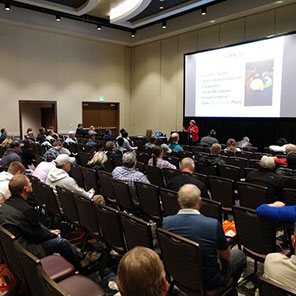
People in Conference Room

In early July 2021, President Biden signed a comprehensive Executive Order. Among other issues, the Department of Health and Human Services is directed to consider the release of proposed rules for the Over-the-Counter (OTC) sale of hearing aids within 120 days.

We might remember that back in August 2017 the bipartisan Over-the Counter Hearing Act was signed into law. The FDA had up to three years to create an OTC, FDA-regulated category of hearing aids. The 2020 Notice of Proposed Rule Making (NPRM) was missed. COVID-19 was cited as a major reason.

Public comment period: don’t miss it!

120 days would put the time for the rules release into early November 2021. It is expected that after the rules’ release there will be a 60-day public comment period.  This is the opportunity for the public to speak up about likes, dislikes, recommendations and omissions in the proposed rules.

This is our chance! Watch out for the notice in the media! As soon as I know, I will certainly post it on this site and on Facebook/whatdidyousaybook as well as Tweet it @WhatDidYouSay88.

However, before all of this happens, it is worthwhile to do a bit of homework by reading  up on information regarding  FDA Public Comments.

That said, after the public comment period, the FDA has 180 days to review the comments and to formulate a final rules edition.

Advocate for Telecoils in OTC Hearing Aids

The recommendation for telecoils to be included in OTC hearing aids is a must as it speaks to the importance of communication access. Product labeling has to have a Telecoil/hearing loop section to educate the users on this assistive technology system that allows for clearer hearing in loud and sound-confused places and that makes businesses accessible to those with hearing loss.

As the features of OTC hearing aids are discussed in the media, one hopes that telecoils and hearing loops will get much-needed public exposure and that prospective users will see the importance of advocating for this technology.

Best for Hearing Better

And so, It would be tragic to miss the opportunity to speak up on our own behalf. Experts agree that at least for the next 10 to 15 years and maybe longer, hearing loops and telecoils are the best bet for hearing better in background sound – which is where most of life is lived.

*****

To learn more about topics related to Hearing and Balance, see my website: hearing-loss-talk.com

Posted in advocacy, communication access, FDA, hearing loops, hearing loss, Loop Minnesota, OTC Hearing aids, Telecoil

Advocacy for Hearing Loops and Telecoils

Loop Minnesota Posted on August 7, 2021 by Monique HammondFebruary 10, 2022

Advocacy for Hearing Loops and Telecoils

Improved hearing and understanding: A matter of communication access

Hearing loops and telecoils work together to help hearing-challenged people hear and understand speech more clearly and effortlessly, especially in loud places. Therefore, Advocacy for hearing loops and telecoils means standing up for communication access for those with hearing loss.

Yet, way too many people do not know about the advantages of these universal, non-proprietary communication systems – what they are or how they work. Advocacy can change this by educating and spreading the word to others with hearing loss as well as within the communities at large.

So what is advocacy?

Advocacy may simply mean standing up for oneself or speaking out on things that must be changed in some way. However, raising an issue and making a case on their own can be hard for people. Those with hearing loss may prefer to connect with groups that advocate for Hearing Loop systems as well as for assistive technology in general, such as Loop Minnesota.

Advocacy for Hearing Loops!

Hearing loops – also called Induction loops – can raise the SNR (Speech-to-Noise Ratio) to levels that hearing aids by themselves cannot do. Even with changing technology, loops are to this day the only means for connecting many people to the same sound source in large venues such as meeting rooms, churches, convention halls etc. Besides, they work the same way worldwide!

Hearing loops come in all sizes covering small rooms such as TV dens as well as whole arenas. Desk top or countertop versions are designed to ease communication for daily living. They make businesses accessible at customer service windows, check-out counters, bank teller windows etc.

The telecoil or T-coil connection

Hearing loops are accessed by means of wireless antennas, called telecoils or T-coils. They are located in most hearing aids, cochlear implants and in portable devices. In hearing instruments, the telecoils must be activated and tuned by the instrument specialist at the time of purchase and the client must be instructed in their use.

The telecoils tap into the magnetic energy field generated by an activated hearing loop. Background noise is greatly diminished or even eliminated. A speaker’s voice becomes clearer and listening less tiring.

And so, hearing loop and telecoil work together as a communication system. They are a team. One without the other is worthless. And this is why we must advocate for both.

Advocacy for telecoils!

Do you know if your hearing aids have telecoils? Were you ever told about them? Some States have a mandate that requires that patients be informed about the use of telecoils when they buy hearing instruments. Minnesota has an acoustics & hearing loop mandate but not a T-coil mandate. At least not yet.

And so, we must inspire our State audiology and HID (Hearing Instrument Dispenser) groups to inform clients about all of their communication options.

Also, hearing aid and cochlear implant manufacturers must be encouraged to keep installing telecoils in their instruments. Email, Tweet – whatever works.

In the end, it is up to us. In so many ways, improved access to communication rests with our hearing loss communities – what we need and want and for what we are willing to stand up.

Note: Any links to websites are for information and illustration only. Loop Minnesota does not favor one brand, manufacturer or distributor over others.

****

Also visit my website hearing-loss-talk.com where I post blogs on all sorts of issues concerning hearing loss.

Posted in advocacy, Advocacy for Hearing Loops, Advocacy for Hearing Loops and Telecoils, Advocacy for Telecoils, assisitive listening, business access, cochlear implants, communication access, counter hearing loops, hearing aids, hearing loops, hearing loss, Loop Minnesota, Signal-to-Noise Ratio, SNR, Telecoil | Leave a reply

Be in the “Loop” while Traveling

Loop Minnesota Posted on June 21, 2021 by Monique HammondFebruary 15, 2022

Be in the “Loop” while Traveling

More loops, but can we connect?

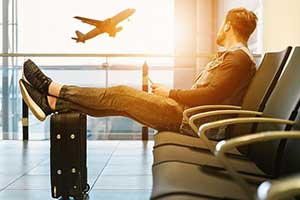
It looks like the travel industry, airports and public access facilities are finally recognizing the benefits of hearing loops for those with hearing loss – which make up roughly 20% of the U.S population, age 12 and over. Loops are popping up in more and more places.

In October 2020, the New York and New Jersey Port Authority released updated accessibility guidelines. Travelers can expect hearing loops to be installed at airports, railways, bus and ferry facilities.

Although last reviewed in August 2018, this site lists airport areas with hearing loops at home and abroad. I am sure that in the time that has since passed, many improvements on existing loops have been made and many more airports can be added to the “accessible” list. I do know first-hand that loops are being installed throughout the terminal and also at information desks at the Minneapolis-St. Paul International Airport in Minnesota.

Telecoils needed!

In Europe, hearing loops have been longtime favorites for providing access to communication for the hard-of-hearing. International travelers can benefit immensely from the multitudes of hearing loops – IF they have telecoils, that is!

A lady told me that the only times that she had her telecoils off when visiting London was while walking outside and in her hotel room. There were loops everywhere. Being able to consistently hear and understand more clearly in museums, banks, ticket counters, trains, taxis and buses boosted her self-confidence and gave her freedom. She said that it made her trip less stressful and a lot more informative.

Learn about it!

I am always amazed how many American people with hearing loss do not know about the advantages of hearingloop-and-telecoil communication access systems. They may have very fancy and complicated hearing aids and devices but they do not knot know if they got telecoils!? Yet, no telecoil means no loop access!

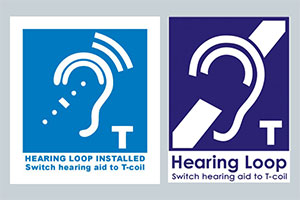
It is actually quite frustrating to see the blue-and-white hearing loss signs with the prominent capital T (for telecoil) everywhere while not being able to connect for better and clearer listening and understanding in noisy and echoey places.

And so, do you know if you have telecoils in your hearing aids or cochlear implants? Are they tuned and activated? As hearing loops gain in popularity, the word about their usefulness must be spread within the hearing loss and hearing professional communities. Learn about the loop communication “system” on this – the Loop Minnesota  website. Talk to your hearing specialist and then –  Bon voyage!

Posted in Airport, cochlear implants, communication access, hearing aids, hearing loops, hearing loss, Loop Minnesota, Telecoil, Travel

Hearing Loops Help Everybody

Loop Minnesota Posted on March 20, 2021 by Monique HammondJuly 22, 2023

Hearing Loops Help Everybody

No Hearing loss needed!

So, you think that you have perfect hearing. Yet, you became exhausted from straining to follow the wedding ceremony of your favorite niece in that echoey church?

Yes, indeed large, reverberating venues like hotel convention rooms, conference halls and places of worship can challenge even those with still decent hearing to understand clearly in background noise.

However, in this case, it did not have to be that way. Signs posted throughout the venue indicated that a hearing loop was in place. Too bad that the general public does not know about this technology or how to access it.

All anybody needs are telecoils

Small wireless antennas called telecoils or T-coils are needed to access a hearing or induction loop. Telecoils are usually found in hearing aids and in cochlear implants, which leads people to believe that hearing loops are only for the hearing-challenged. Wrong!

The truth is that anybody who has a device with telecoils can tap into an activated hearing loop for much clearer speech signals. In venues that display the universal blue hearing loss sign marked with a T (for telecoil) loop listeners/receivers are available for those without telecoils in their hearing aids as well as for the general public.

Loop listeners and personal FM listening devices equipped with a telecoil are usually used with a set of light headphones or earbuds. Now, paired with an app, earbud sets with telecoils can turn an iPhone into a loop receiver.

Learning more

So, what are telecoils and how does a hearing loop work? The answers to these questions are beyond the scope of this blog. I refer you back to the main body of our website at loopminnesota.org. Also, read our blog posts on this site for more information and practical applications, such as loops for daily living.

As always, the links for different products or websites are for information and illustration only, as Loop Minnesota does not favor one manufacturer or distributor over another.

****

For any questions or suggestions regarding hearing loops, contact us.

Also visit my website: hearing-loss-talk.com where I blog about all sorts of topics related to hearing and hearing loss.

Posted in assisitive listening, cochlear implants, hearing aids, hearing loops, Hearing Loops Help Everybody, hearing loss, Loop Minnesota, Telecoil

Post navigation

← Older posts

Our Partner Organizations

Our Partner Organizations
Minnesota Commission of the Deaf, Deafblind & Hard of Hearing
Minnesota Council on Disability
HHLAA Get in the Hearing Loop
©2026 - Loop Minnesota - Weaver Xtreme Theme Privacy Policy
↑